How Inspections Enhance Pest Control Services Sussex County Providers Offer

Pest control rarely succeeds on product alone. The real difference between a short-lived treatment and a lasting result usually starts much earlier, during the inspection. In Sussex County, where properties range from older shore homes and rural farmhouses to newer developments and small commercial buildings, inspections shape every smart decision that follows. They tell technicians what pest is actually present, how long the activity has been going on, where the pests are entering, what conditions are helping them thrive, and whether treatment is even the first thing a property needs.
That may sound obvious, but many pest issues are less straightforward than they appear. A homeowner hears scratching in the wall and assumes mice, only to learn it is a squirrel entering through a roof return. A restaurant owner spots a few small roaches near a floor drain and thinks it is a sanitation issue alone, when the deeper problem is moisture inside a wall void near a leaking line. Someone finds what looks like termite damage in a sill plate, but the marks turn out to be old carpenter ant galleries from a problem that is no longer Pest Control Services Sussex County active. Without inspection, the response is guesswork. With inspection, pest control becomes targeted, efficient, and far more useful.
That is why the strongest Pest Control Services Sussex County residents and businesses rely on do not begin with a spray can mindset. They begin with observation, diagnosis, and a plan.
The inspection is where pest control becomes professional
A proper pest inspection does more than confirm that insects or rodents are present. It connects evidence to cause. That distinction matters because most pests are opportunists. They settle where food, water, shelter, and access overlap. If a provider only addresses the pest itself and misses the conditions supporting it, the result may look good for a week or two and then unravel.
In practice, inspections often reveal things the property owner has normalized or simply stopped noticing. A dryer vent flap that never closes fully can become an easy route for mice. Dense foundation plantings may hold moisture and conceal termite shelter tubes. Gaps under warehouse dock doors can invite occasional invaders and rodents alike. In a beach-adjacent home, crawlspace humidity may attract wood-destroying organisms long before visible damage appears inside the living area.
Experienced technicians learn to read properties almost like a map. They look for friction marks along baseboards, droppings in utility spaces, grease trails near openings, frass under wood trim, blistering paint, damaged weather stripping, inactive nests, and moisture signatures. Even subtle details matter. The size of droppings, the direction of wood galleries, the location of egg cases, and the timing of activity all help separate one pest problem from another.
That investigative step protects the customer from wasted effort. It is one thing to treat where pests have been seen. It is another to identify where they are living, breeding, or entering. Only the second approach solves recurring problems.
Sussex County properties create unique inspection challenges
Inspection work in Sussex County is shaped by local conditions. Coastal moisture, seasonal occupancy, agricultural surroundings, wooded lots, and variable construction styles all influence pest pressure. A technician working this region needs more than textbook knowledge. They need local pattern recognition.
Homes near the shore often deal with humidity, wind-driven gaps, and periods of vacancy. A house that sits empty for much of the winter may develop unnoticed moisture issues under sinks, in crawlspaces, or around HVAC systems. Those quiet conditions can support silverfish, ants, occasional invaders, and even rodents Pest Control Services Sussex County if access points are available. When occupants return in spring, they often think the pest problem appeared suddenly. In reality, the conditions built over months.
Further inland, farm-adjacent properties may face rodent pressure tied to harvest cycles, feed storage, or changing field conditions. A structure can remain quiet for weeks and then see a spike in mouse activity as outdoor food sources shift. Termites and carpenter ants are also common concerns where older wood elements, tree stumps, and damp foundations exist together.
Commercial buildings present their own variations. Food service sites need close attention to drains, utility penetrations, storage practices, and hidden moisture. Offices may struggle more with occasional invaders, pantry pests, or stinging insects around exterior entries. Multifamily housing adds another layer, because units share walls, plumbing runs, and trash areas, which means an inspection cannot stop at the point where one resident notices activity.
When local providers inspect with those regional realities in mind, service becomes more precise. They are not just checking for pests. They are evaluating how the property, weather, occupancy pattern, and surrounding environment interact.
Accurate identification changes everything
Many pest control failures start with misidentification. The wrong target leads to the wrong treatment, and the wrong treatment leads to frustration. Inspections reduce that risk.
Take ants as an example. A customer may report "tiny ants in the kitchen," but several species can fit that description. Odorous house ants often trail toward sweets and moisture. Pavement ants may enter from cracks and forage broadly. Carpenter ants raise a different level of concern because their presence can point to wet or damaged wood nearby. Treating all of them as if they behave the same way is a mistake.
The same issue comes up with wood-destroying pests. Termites, carpenter ants, carpenter bees, and certain beetles can all leave wood damage, but they do not leave the same clues. Termites tend to follow moisture and stay concealed, often leaving mud tubes or soil evidence. Carpenter ants create smoother galleries and often push out sawdust-like frass. Carpenter bees bore visible round holes. If a technician does not inspect carefully, the customer may pay for a service that addresses the wrong problem.
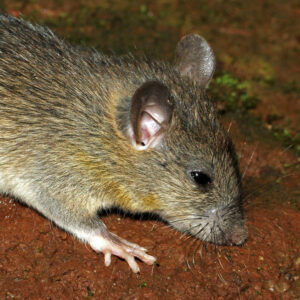
Rodent work also benefits heavily from inspection-based identification. House mice, Norway rats, roof rats, squirrels, and even bats can create noises and contamination concerns. Their entry points, nesting habits, risks, and control strategies differ. A few pellets in an attic can mean very different things depending on size, shape, and location. Good inspection separates assumption from evidence.
That level of accuracy is where professional judgment pays off. A seasoned inspector often rules out several possibilities before confirming one. That may not be flashy, but it is what keeps treatment ethical and effective.
Inspections reveal the real scope of an infestation
People often call pest control when they first notice visible activity, but by then the issue may be larger or smaller than it seems. Inspection helps set expectations.
A single wasp near a window might mean little. A cluster around the soffit may point to an active nest. One roach seen during daylight in a clean kitchen might suggest a hidden population under appliances or inside wall voids, especially if moisture is present. Termite swarmers around a window can alarm any homeowner, yet inspection determines whether they came from an active colony within the structure, entered from outside, or left evidence from a swarm that has already passed.
This matters for both cost and urgency. If the activity is isolated, the solution may be relatively simple. If it is widespread, a provider can explain why broader treatment, exclusion work, sanitation adjustments, or follow-up visits are necessary. Customers deserve that clarity.
A good inspection also prevents overreaction. Not every pest sighting means a major infestation. Sometimes a technician finds a seasonal issue caused by weather, lighting, or temporary moisture conditions. In those cases, measured service and practical corrections work better than aggressive treatment. Good pest control is not about doing more. It is about doing what fits the evidence.
The best treatment plans are built around inspection findings
Once the inspection is complete, it informs every part of the service plan, from material choice to placement to timing. This is where inspections directly improve results.
If a technician finds that mice are entering through utility penetrations behind a stove and a basement sill gap near the electric service, trapping alone will not hold for long. Exclusion becomes central. If German roaches are concentrated near a dishwasher void and a leaking supply line, the plan may prioritize targeted baiting, crack and crevice treatment, moisture correction, and follow-up monitoring rather than broad surface applications. If termite conditions are discovered around mulch piled against siding and a wet crawlspace support, the service conversation expands beyond treatment and into structural risk reduction.
Customers often assume the "treatment" is the main event. In many cases, the inspection is what makes that treatment meaningful. It determines whether the answer is exclusion, habitat modification, sanitation improvement, monitoring, limited product use, or a combination.
This is also where integrated pest management becomes practical rather than theoretical. Instead of reacting to pests after the fact, the technician uses inspection findings to reduce the conditions that support them. The property becomes less attractive to pests, which is the closest thing pest control has to a durable advantage.
What a thorough inspection typically looks for
A well-run inspection usually examines several layers of the property, not just the room where the customer noticed activity.
- Active signs such as live insects, droppings, nesting material, frass, mud tubes, chew marks, and odor
- Entry points around doors, foundations, vents, rooflines, plumbing penetrations, utility lines, and crawlspace access
- Conducive conditions including leaks, humidity, standing water, clutter, food residue, vegetation contact, and wood-to-soil contact
- Structural or use patterns that affect pest pressure, such as vacant periods, storage habits, trash handling, and neighboring environmental features
- Areas that support monitoring, so future service can measure whether activity is increasing, decreasing, or shifting
Even that list only captures part of the process. The real value comes from how those observations are interpreted together. A damp sill alone is one clue. A damp sill beside old frass, with ant activity near a window frame and a downspout overflowing nearby, tells a much clearer story.
Inspections improve safety and reduce unnecessary chemical use
One of the least appreciated benefits of inspection-driven service is restraint. When a provider understands exactly what is happening, they can avoid blanket applications that add cost without adding much value.
That matters in occupied homes, childcare settings, food businesses, medical environments, and properties with pets. It also matters for customers who simply want a sensible approach. If the issue is tied to a narrow harboring zone or a specific access point, targeted treatment often makes more sense than broad coverage.
In real service work, the cleanest solution is often a combination of modest treatment and strong correction. Seal the gap. Dry the leak. Adjust storage. Prune vegetation away from the siding. Remove the nest. Monitor the area. Those changes frequently do more over time than repeated general applications ever could.
Inspection makes that possible because it replaces assumptions with evidence. The result is usually safer, more efficient, and easier for the customer to maintain.
Documentation turns a visit into an ongoing strategy
Inspections are not just for first visits. They matter on recurring service too. In fact, some of the best pest management happens through comparison over time.
A technician who documents entry points, moisture areas, trap activity, seasonal pressure, and previous corrections can return with context rather than starting from zero. That is especially useful for commercial accounts and larger homes where pest patterns shift across seasons. It is also valuable in Sussex County vacation homes, where occupancy changes can alter pressure dramatically between winter and summer.
For example, a spring inspection may note ant activity around window trim and excess moisture in a crawlspace. A midsummer visit can then confirm whether corrections worked or whether the colony relocated. A fall rodent inspection may identify vulnerable garage door corners and seed storage issues before colder weather drives mice indoors. When service is tracked this way, each visit improves the next.
Good documentation also helps customers make informed decisions. If a provider can show recurring signs in one exterior corner year after year, the homeowner may decide to invest in drainage correction or siding repair. Without inspection records, those choices often get delayed because the pattern is harder to see.
Inspections help distinguish urgent problems from manageable ones
Not every pest issue deserves the same level of urgency, and a reliable inspector knows how to explain that calmly.
A confirmed termite issue affecting structural wood deserves prompt action. So does a rodent infestation in a food prep area or a stinging insect nest at a heavily used entry. By contrast, a few occasional invaders after heavy rain may call for exclusion and perimeter attention, not alarm. Pantry pests in one cabinet may be resolved with source removal, cleaning, and monitoring rather than a property-wide treatment program.
This is where trust gets built. Customers remember when a provider does not oversell the problem. They also remember when a provider catches a serious issue early and explains it clearly. Inspection is the basis for both.
I have seen situations where homeowners worried intensely about visible spiders, while the more meaningful problem turned out to be crawlspace moisture and accessible insect prey feeding that spider activity. I have also seen customers dismiss a few "flying ants" that were actually termite swarmers, because they assumed anything serious would look more dramatic. In both directions, inspection corrects perception.
For real estate, renovations, and seasonal openings, inspections are even more valuable
Certain moments make inspections especially important. Home purchases are one. Renovation planning is another. Seasonal property openings in Sussex County also deserve attention, especially after a vacant period.
During a real estate transaction, pest evidence can affect negotiations, repair planning, and future maintenance costs. An inspection may uncover wood-destroying insect conditions, rodent entry routes, or moisture problems that a general walkthrough misses. That does not always mean a deal-breaking issue. Often it means the buyer gets a clearer picture of what should be corrected early.
Before renovations, inspections can prevent unpleasant surprises once walls or flooring are opened. If pest damage, nesting, or hidden moisture exists, it is better to know before material and labor costs rise. Seasonal openings are similar. A vacation property may look fine at a glance, while a closer inspection reveals droppings in a utility room, carpenter bee activity in trim, or ants concentrated around a quietly leaking line.
In each case, inspection turns a reactive service call into preventive decision-making.
What customers should expect from a provider during the inspection process
A quality inspection should feel methodical, not rushed. The technician should ask where activity has been seen, when it occurs, whether it is seasonal, and what changes have happened around the property. They should look beyond the immediate complaint and explain what they are seeing in plain language.
Customers should also expect practical recommendations, not just a treatment quote. Sometimes the best advice includes maintenance steps the owner or manager needs to handle. That might involve fixing a door sweep, reducing storage clutter, correcting drainage, or replacing damaged vent screening. A provider who skips those conversations is leaving value on the table.
The strongest Pest Control Services Sussex County companies offer tend to share a few habits during inspections:
- They verify the pest before recommending a plan
- They explain conducive conditions and how those affect recurrence
- They identify access points and discuss exclusion where relevant
- They set realistic expectations about timing, follow-up, and limitations
- They document findings clearly enough that the customer can act on them
That last point matters more than many realize. A vague statement like "signs of activity present" helps no one. A useful note might specify fresh mouse droppings under the sink, gnawing at rear utility penetration, and daylight visible beneath the side garage door. One can support action. The other just fills a form.
Why inspections often save money over time
Some customers hesitate when they see inspection as a separate or significant part of service. They assume the real value is in the treatment itself. Over time, the opposite is often true.
A strong inspection can prevent repeated visits for the same unresolved issue. It can keep a minor moisture-driven ant problem from becoming a wood-damage repair. It can catch early termite conditions before structural costs rise. It can reveal exclusion needs that reduce recurring rodent service. It can also steer a customer away from paying for a broad program when a localized correction would do the job.
That is the practical economics of pest control. Diagnose first, treat second, monitor as needed. The less guesswork involved, the less money tends to be wasted.
There is also the matter of disruption. Businesses lose time when pests return. Homeowners lose peace of mind when a problem appears fixed but resurfaces two weeks later. Inspection reduces those false starts. It creates a better first decision, which usually means fewer corrective decisions later.
Lasting pest control starts before treatment
When pest control works well, it can look simple from the outside. The problem gets identified, addressed, and kept from returning. Behind that simplicity, though, is usually careful inspection.
In Sussex County, where climate, building type, occupancy patterns, and surrounding land use all influence pest pressure, inspections are not an extra. They are the foundation. They help providers identify the right pest, measure the real scope of activity, choose the most sensible treatment, reduce unnecessary chemical use, and spot the conditions that invite pests back.
That is why inspections enhance the Pest Control Services Sussex County providers offer in such a measurable way. They turn service from reaction into strategy. They protect the customer from guesswork. And they give treatments a real chance to last.
Affordable Pest Solutions LLC
Based in Budd Lake, New Jersey 07828
Service area: Sussex County, Morris County, and Warren County, New Jersey
+1 973-229-9547
FAQ About Pest Control Services Sussex County
What is included in a pest control service in NJ?
A visit generally starts with an inspection to identify the pest and assess activity, access points, and contributing conditions. The proposed service may include treatment, monitoring, exclusion recommendations, and follow-up. Ask which pests and areas are covered by the written quote.
How much does a pest controller charge in NJ?
Pricing depends on the pest, property size, severity of activity, and work required. A single treatment and an ongoing plan can have different costs and coverage. Request an inspection-based estimate that explains the included work, follow-up fees, and warranty terms.
How to prepare my home for pest control?
Ask for instructions specific to the planned service. The technician may need access to inspection areas and may ask you to move belongings or protect food and dishes. Mention pets, aquariums, and any household concerns beforehand. Follow the product label and the technician's instructions about leaving and re-entering treated areas.